Lecture Notes on The Canterbury Tales: Overview and "The General Prologue"
Compared to Beowulf, it's a whole new world, with occupations other than warrior, and a new language, Middle English: Listen and Look: "Whan that Aprill with his shoures soote . . ."
The situation mirrors the medieval world view:
- Everyone goes on a religious journey
- A sense of comprehensiveness
- People as types
- Hierarchal view of the world
But . . . .
- The genre is Estates Satire, so there is a lot of satire, especially against the clergy who are supposed to be exemplars, but the characters are mixed; they are not only types.
- There's a sense of humor, and different voices. The voice of Geoffrey is tentative, and what the poet thinks has to be inferred. -- Compare to Beowulf .
- Chaucer's attitude & humor: See the description of The Cook and the description of The Pardoner.
It was a very popular book.
The Knight
The Squire
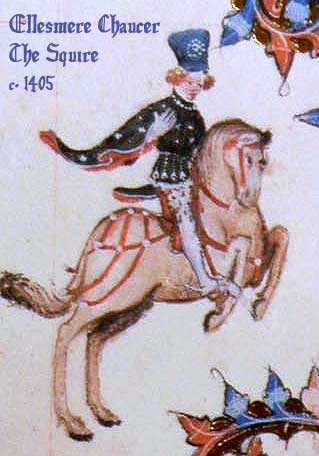
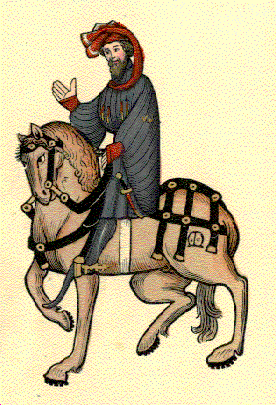
- He is a lover and a fighter, and the two are intertwined.
"And he had been sometime in chivachye,
In Flaundres, in Artoys, and Picardye,
And born him wel, as of so litel space,
In hope to stonden in his lady grace." (lines 85-88)
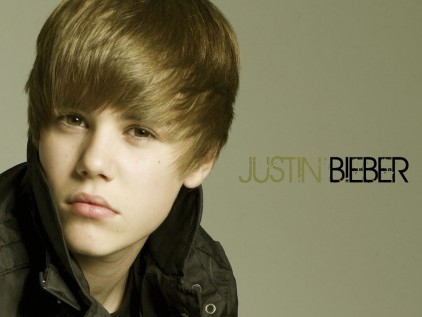
- He's the ideal male hottie of his time. Question: How does he measure up to Justin Beiber?
- "Curteis he was, lowely, and servysable, / And carf biforn his fader at the table."
The Yeoman
He takes care of equipment and is defined by equipment.
The Prioress.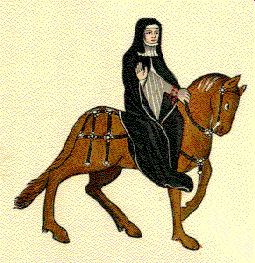
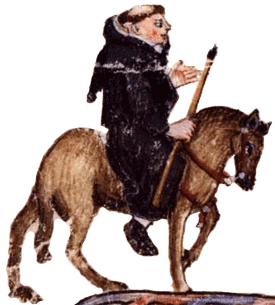
The Monk
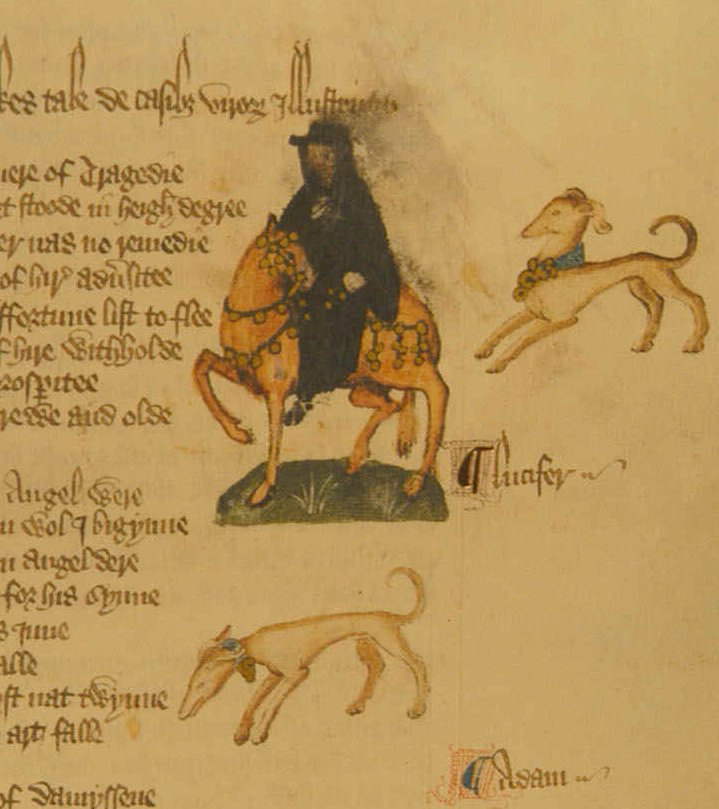
The Friar
Link to page on monastic orders and Friars
- "A limitour, a ful solempne man" (line 209)
- QUESTION: Can you find the punning sex joke in lines 210 - 214?
- His defensiveness (line 244)
- "Curteys he was, and lowly of servyse" (line 250) [The Knight (line 46), the Squire (line 99), and the Prioress (lines 139-140) are also courteous.] QUESTION: What is Chaucer's view of courtesy?
- His name
The Merchant
QUESTION: What's the point of the last two lines of the description of the Merchant?
The Clerk
- He's driving a '69 VW Bug, but he could get a much better ride if he would just sell one of those books.
- He has "no benefyce" (line 293), and doesn't seem much interested in getting one.
- Question: What is the satirical point of lines 299-300, "But al be that he was a philosophre, / Yet hadde he but litel gold in cofre"? [NOTE: According to the folklore of the time, great philosophers were supposed to be able to turn dross (e.g., pots & pans) into gold.]
The Sergeant of the Law
Many things in common with a modern lawyer
The Franklin
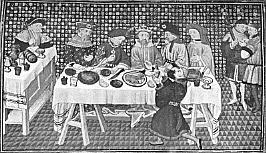
- A Franklin is a Freeholder, and freedom (in the sense of generosity) is a keynote to his character and to his story.
- "Epicurus owne sone" (line 338)
- "His table dormant in his halle alway / Stood redy covered al the longe day." (lines 355-356)
- Question: Where's the satire in this portrait?
The Craftsmen & their Cook
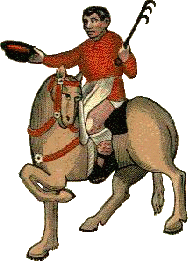
- Their new wealth
- "in o liveree" (line 364)
- their pride
The Cook
The Shipman
- He owns his own ship, so he's an independent operator, kind of like some long-haul truckers of today.
- "his ship was called the Magdalen" (line 412)
The Doctor of Medicine
- "be it hot or cold or moist or dry" (line 422)
- "for each helped the other to profit" (line 429)
- the list of authorities
- the expensive & tasteful clothes
- the quip at the end (lines 445-446)
The Wife of Bath
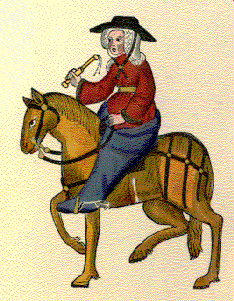
Both womanly & tomboy; the single most famous character in Chaucer.
The Parson
- "He was also a learned man, a clerk" (line 482)
- "rather give / his poor parishoners thereabouts / part of his own offerings and property" (lines 489-491)
- "And shame it is, if preest take keep, / A shiten shepherde and clene sheep" (lines 505-506)
- satire of corruptions -- lines 510 ff.
- "But if any person were obstinate" (line 523) -- similar to the knight in combination of humility/courtesy & strength
The Plowman
(line 531) Salt of the earth, and everyone's social safety net
There was also a Reve and a Millere,
A Somnour and a Pardoner also,
A Manciple, and myself; ther were namo. (lines 544 - 547)
—Note that Geoffrey puts himself among the rascals.
The Miller
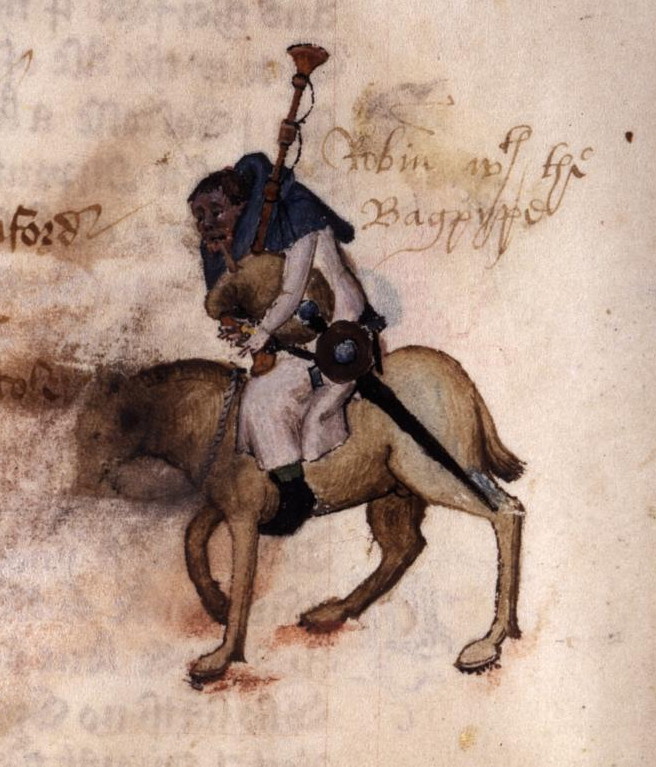
- His importance to the life of the community
- His swinish appearance
- "he had a thumb of gold" (line 565)
The Manciple and The Reeve
have similar jobs and the both of them both care for their masters & cheat them.
The Summoner
- "As hoot he was and lecherous as a sparwe, With scalled browes blake and piled berd" (lines 628-628)
—Ironically, he's in charge of morals
The Pardoner
- Like the Friar, technically a holy beggar, so he is soliciting gifts, not payment, and so the gifts qualify a person for pardons (or "indulgences")
- the theory of pardons according to Wikipedia.
- His historical importance -- Martin Luther
- His vanity
- His showmanship
- "But in the end, to do him justice" (line 709)
Geoffrey's philosophy as narrator (line 727 ff.) -- the tales fitted to the teller