
The Knight (Ellesmere Chaucer):
1410?
Renaissance >>
See the difference
in subject matter
and style?
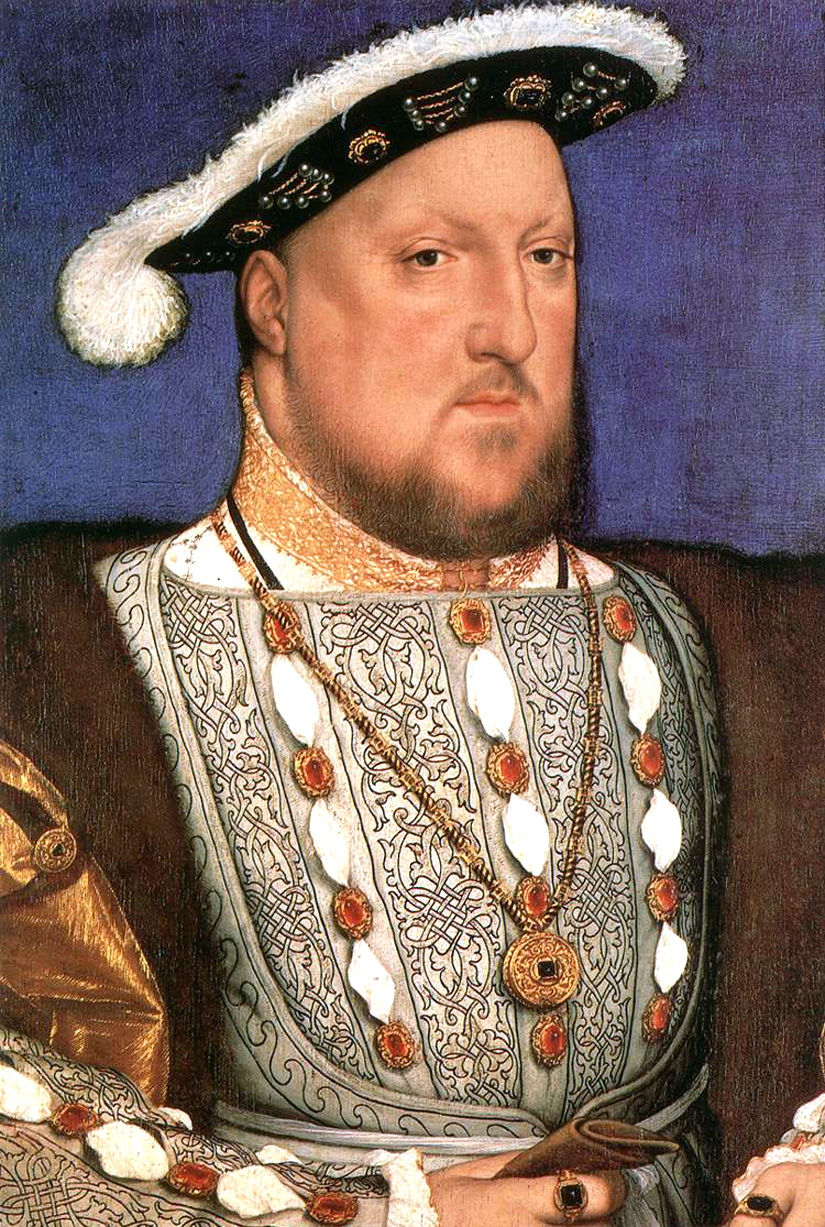
Henry VIII: 1536
| NAVIGATION: | Index of English 340 Materials | Index of Dr. Weller's Class Material |
"A single Renaissance printing press could produce 3,600 pages per workday, compared to forty by typographic block-printing and a few by hand-copying. Books of bestselling authors like Luther or Erasmus were sold by the hundreds of thousands in their lifetime."
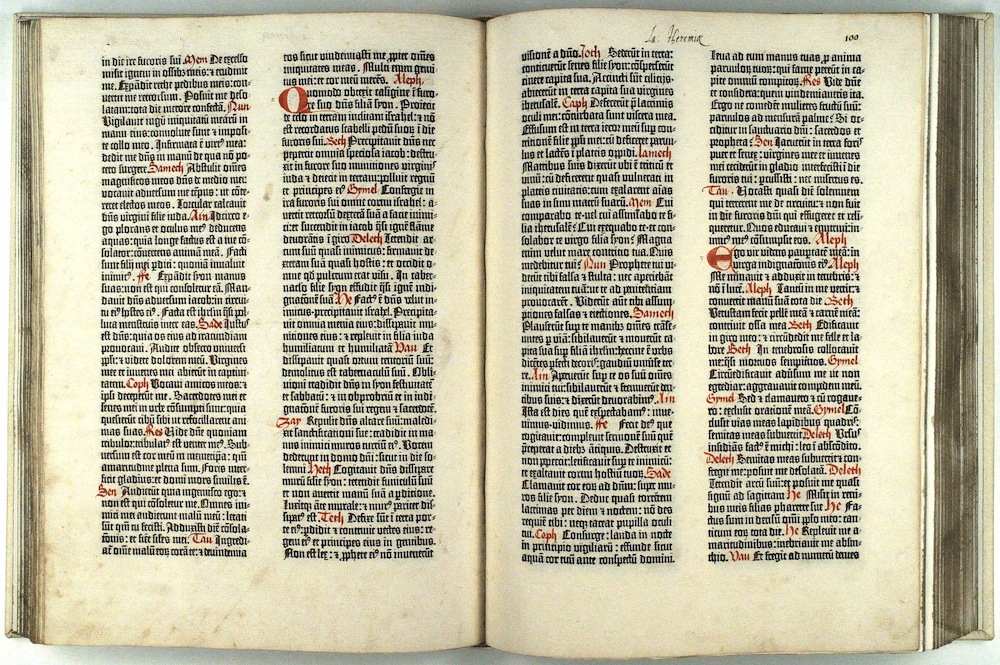
The outcome: the world opens up
—There's a new world (North and South America)
—There's the possibility of a new civil and religious order, as seen in More's Utopia; by 1642 (the virtual end of the literary period we are studying) the English Civil War has begun, and by 1649 a new civil and religious order is established, although it only lasts for 10 years and is nothing like Utopia.
Here's our friend, Chaucer's Knight, and Henry VIII, father of Shakespeare' Queen, Elizabeth:
The Knight (Ellesmere Chaucer): 1410? | << Middle Ages Renaissance >> See the difference in subject matter and style? | Henry VIII: 1536 |
The painting of Henry VIII was done by Hans Holbein the Younger,
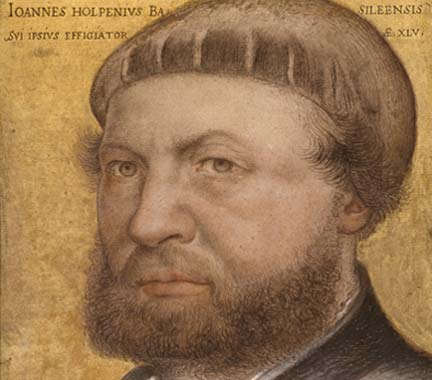 |
of Hans Holbein the Younger |
son to Hans Holbein the Elder, about whom NNDB says:
"Most of his early works indeed are taken from the Passion, and in these he obviously marshalled his figures with the shallow stage effect of the plays, copying their artificial system of grouping, careless to some extent of proportion in the human shape, heedless of any but the coarser forms of expression, and technically satisfied with the simplest methods of execution."Here's an example of the style:
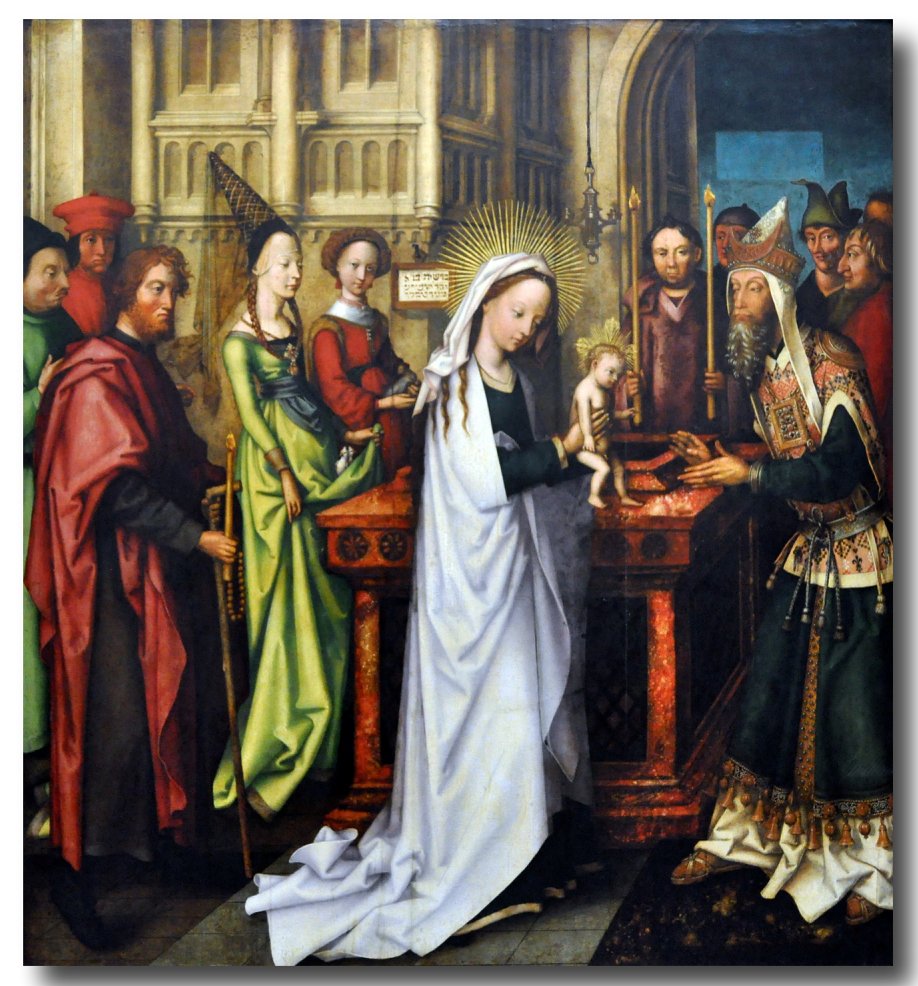 |
by Hans Holbein the Elder, 1500-1501 |
Let's compare that to Da Vinci's Last Supper, painted a little earlier, about 1495-1498:
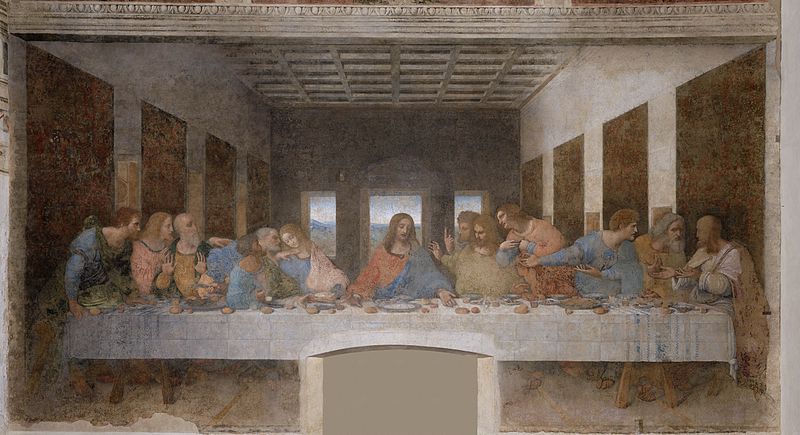
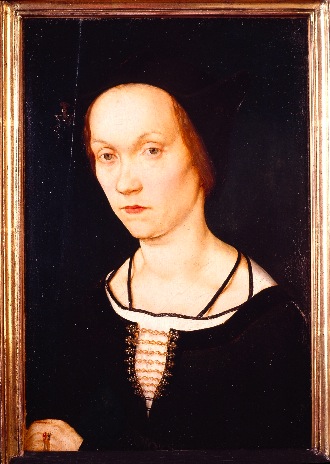
It's not that Holbein the Elder couldn't paint any other way. About ten years later (1510) he came under more modern (e.g., Renaissance) influences and produced the portrait below:
One more contrast, again using Hans Holbein the Elder:
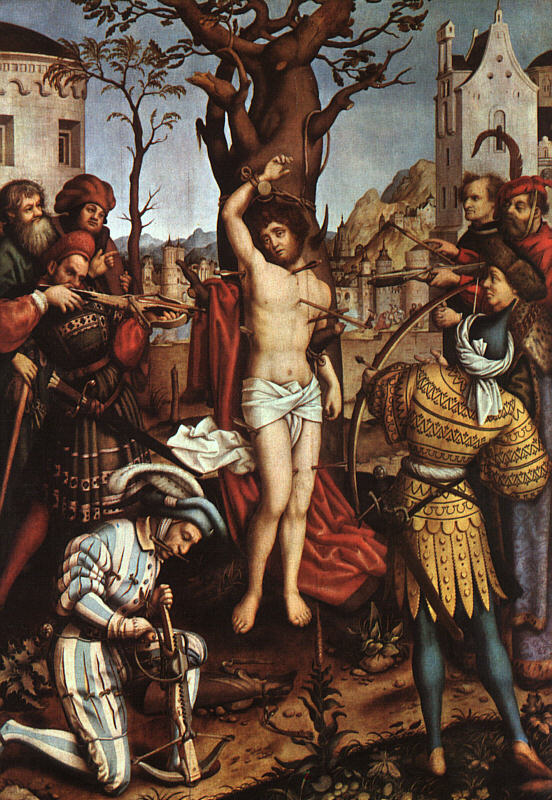 | << Middle Ages Renaissance >> See the difference in subject matter and style? | 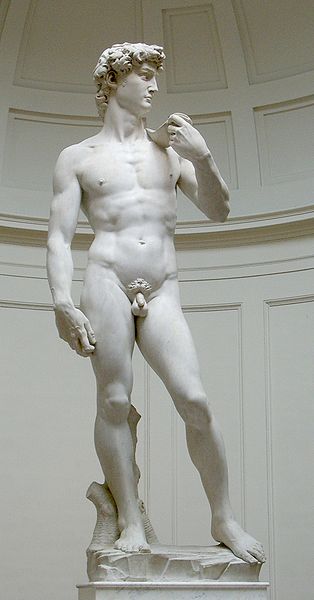 |
Drama:
A contrast:
| Characters in Everyman:
Everyman Messenger God Death Fellowship Kindred Cousin Goods Good Deeds Knowledge Confession Beauty Strength Discretion Five Wits Angel Doctor | << Middle Ages Renaissance >> See the difference in subject matter? | Characters in Hamlet:
Hamlet—Son of the former king, and nephew of the present King Claudius—King of Denmark, Hamlet's uncle. Gertrude—Queen of Denmark, and mother to Hamlet Polonius—Lord Chamberlain Ophelia—Daughter to Polonius Horatio—Friend to Hamlet Laertes—Son to Polonius Voltimand, Cornelius—Courtiers Rosencrantz, Guildenstern—Courtiers, friends to Hamlet Osric—a Courtier Marcellus—an Officer Bernardo—an Officer Francisco—a Soldier Reynaldo—Servant to Polonius Ghost of Hamlet's Father Fortinbras—Prince of Norway Gravediggers—A sexton and a clown Player King, Player Queen, Lucianus, etc.—Players |
Mystery Plays, and their outgrowth, Morality Plays, faded out of sight, under pressure from the English Reformation and from the growth of professional theater.
Morality Plays: The Norton Anthology says, "The surviving examples of this genre include only a handful from the fifteenth century (the earliest, The Pride of Life, ca. 1400) but more than two dozen from the sixteenth century, dating as late as 1579 (Marriage between Wit and Wisdom.)
BUT by 1579 the game is up for medieval drama. 1576 is the date of the building of The Theatre. (See the opening part of my first Shakespeare lecture.)