NAVIGATION: Index of Dr. Weller's Class Materials Index of English 340 Materials

Syllabus for English 340, Spring 2018


(8:00 am - 9:30 am MWF; Patterson Hall 116)
Web address of this syllabus:
https://shakespeare-navigators.com/courses/English340/English_340_Syllabus_Spring_18.html
Dr. Weller
Office: Patterson 211K
Office Hours: 11:30 - 12:30 MWF
Phone: 359-7057
e-mail: pweller@ewu.edu

Student Learning Objectives:

  1. Students will have a general knowledge of the political and cultural events which form the background of the British literature written the eras covered in the course.
  2. Students will have a general knowledge with the characteritics of the British literature of the eras covered in the course.
  3. Students will be able to present a persuasive analysis of at least three works by the authors discussed in class.

Texts:

The Norton Anthology of English Literature, 9th Ed. Vols. A & B.

Calendar:


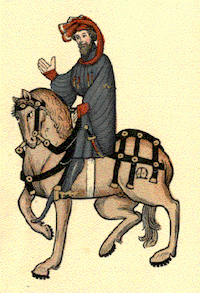
The Knight

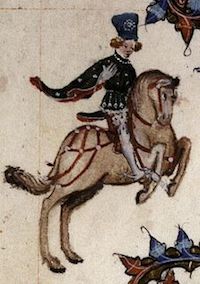
The Squire

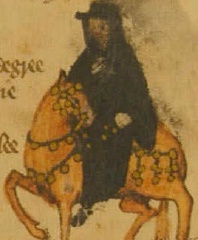
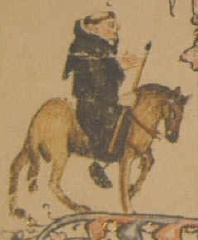
The Monk

The Frair
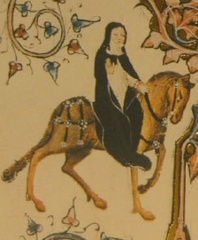
The Prioress
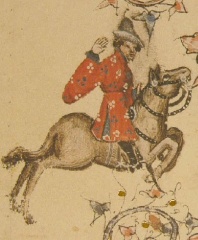
The Merchant
Monday, April 2: Course Overview; Introduction to Beowulf
British Literature of the Middle Ages and the Renaissance: Introductory Lecture.
Beowulf: Background.
Beowulf: Sound and Effect.
The Approach of Grendel in Old English.
Wednesday, April 4: Beowulf
Reading Assignments:
Discussion Project: Please read the following collections of passages and prepare to answer the discussion questions at the end of of each.
Friday, April 6: Beowulf
Please consider the symbolic significance of each of the three monsters: What does each have in common with humans, and how does each one represent a violation of fundamental values of the humans?
Monday, April 9: The Canterbury Tales
Looking Ahead: Comments on Possible Topics for Student Presentations on Literature of the Middle Ages. --Also see my page about student presentations. --Sign up on Canvas by no later than 8:00 p.m., Sunday, April 15.
Reading Assignments:
  • Introductions to Geoffrey Chaucer and to The Canterbury Tales (pp. 238 - 243).
  • The General Prologue
Lecture Notes on the General Prologue.
Wednesday, April 11: The Canterbury Tales
Reading Assignments:
  • Introductions to Geoffrey Chaucer and to The Canterbury Tales (pp. 238 - 243).
  • The General Prologue
Short Lecture: The ideal characters: The Knight, the Parson, and the Plowman: Go to Lecture Notes on the General Prologue.

Questions about Characters (For each one, you should focus on the satirical points being made. You don't have to stick to my questions.)
  1. The Squire is the ideal male hottie of his time. What does he have in common with current models? To what extent is he being made fun of?
  2. The Monk: What is the satirical point of the comparison between his bridle bells and chapel bells? See (lines 169-171). In order to answer this question, you need to know that there were no clocks, and the chapel bells were used to announce the canonical hours.
  3. The Friar: Can you find the punning sex joke in lines 210 - 214?
  4. The Merchant: What's the point of the last two lines of the description of the Merchant? Do we now have similar attitudes about businessmen?
  5. The Clerk: Who would this be now? And how do we view that person?
  6. The Prioress: 1) Both the Knight (See line 46) and the Prioress (See line 132) practise courtesy, but there's difference in their ideas of what makes a person courteous. What is the difference? 2) What is the point of lines 142 - 150? (Pay particular attention to the two uses of the word "conscience.")
  7. The Wife of Bath: She is the single most famous character in Shakespeare's Canterbury Tales, why do you suppose that is?
Friday, April 13: The Canterbury Tales
Reading Assignments: The Wife of Bath's Prologue and Tale.
Discussion questions on the Wife of Bath's Prologue and Tale.

Monday, April 16: The Canterbury Tales
Reading Assignments: The Merchant's Prologue, Tale, and Epilogue and The Franklin's Tale.
Discussion Questions on the Merchant's Tale and The Franklin's Tale.
General Discussion Question: What are Chaucer's conclusions on the subject of marriage? (As you answer these questions, please try to think of supporting examples from more than one story.)
  1. What mistakes do men make in choosing a wife?
  2. What is the source of conflict between husband and wife?
  3. What psychological damage is done by an unhappy marriage?
  4. What is the key to a happy marriage?
  5. What benefits does a happy marriage confer?

Wednesday, April 18: Prep for Student Presentations.

Friday, April 20: Student Presentations
 1: Chaucer, "The Miller's Tale" -- Kate Blevins, Christian Smith, Stephanie Cosby
 2: "Sir Orefeo" -- Grace Caraway, Kaylie Pixlee, Laura Prawdzik
 3: John Gower, "The Tale of Philomene and Tereus" -- Alex Thomas
 4:
The Medieval Practice Quiz will be ready by 4:00 p.m. It has exactly the same format as the regular quiz which you will take. The only difference is that the regular quiz will be longer.

Monday, April 23: Student Presentations
 5: Thomas Hoccleve, My Compleinte -- Kurtis Ebeling, Ian Lovering, & Anthony Picard
 6: Thomas of England, Le Roman de Tristan -- Kimmy Korson & Maya Elston
 7: York Play of the Crucifixion, -- Jonah Wilkinson & Bailey Stephens
 8: Robert Henryson, "The Cock and the Fox"-- Tim Lacey

Wednesday, April 25: Student Presentations
 9: Margery Kempe, The Book of Margery Kempe -- Lindsy Callahan, Laine Gaither, & Haley Cardenas
10: Sir Thomas Malory, Morte Darthur -- Macie Gardner, Sarah Smith, & Mel Markel
11: Marie De France, "Lanval" -- Kim Miyamoto, Adam Howes, & Kayla Smith
12: "Cúchulainn's Boyhood Deeds" -- Tabby Liljenberg, Jocelyn Walters, & Alex Watson

Friday, April 27: First Quiz
No class meeting: The Middle Ages Quiz is open from 8:00 a.m. to 8:00 p.m. Don't Miss It!


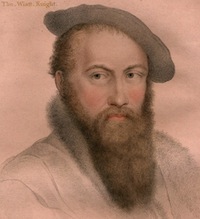
Sir Thomas Wyatt
The Elder

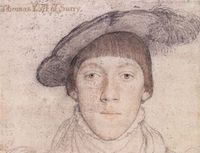
Henry Howard,
Earl of Surrey
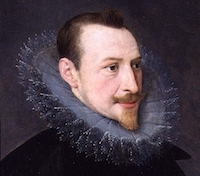
Supposed Portrait
of
Edmund Spenser

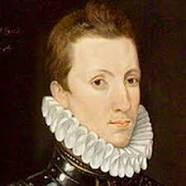
Sir Philip Sidney
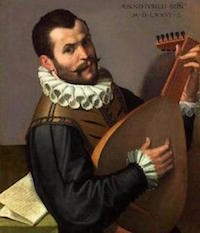
Possible Portrait
of
Thomas Campion
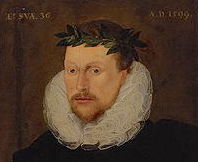
Michael Drayton
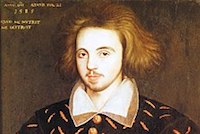
Perhaps
Christopher Marlowe
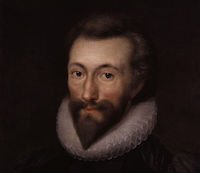
John Donne
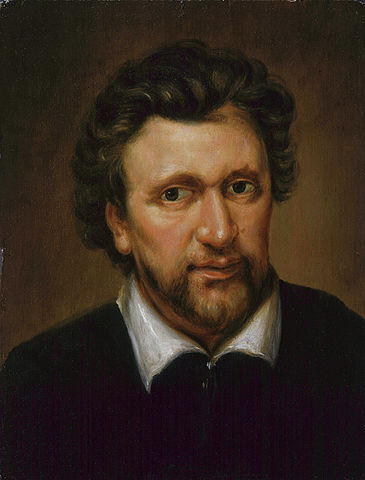
Ben Jonson
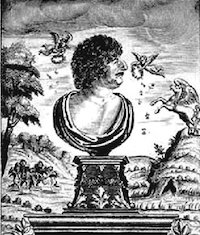
Robert Herrick
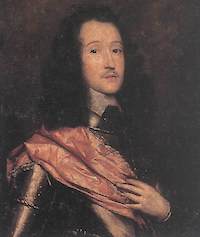
Richard Lovelace
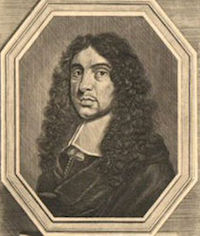
Andrew Marvell
Monday, April 30 Begin Unit on The Sixteenth Century
--Reading Assignment: "The Sixteenth Century 1485 - 1603"
--Participation Opportunity: Perform a poem on the syllabus for Monday, May 7; Wednesday, May 9; or Friday, May 11. This will fulfill your presentations requirement for this unit. See my page About Performing a Poem. Sign up in the Canvas discussion section.
--Notes for a Lecture on the Transition from the Middle Ages to the Renaissance.

Wednesday, May 2: Lyric Poetry
--Notes for a Lecture on Petrarchan Poetry in the English Renaissance.
Sir Thomas Wyatt the Elder (1503-1542):
Henry Howard, Earl of Surrey (1516/1517 - 19 January 1547):

Friday, May 4: Prep for Performances

Monday, May 7: Lyric Poetry continued again
George Gascoigne (c. 1535 - 7 October 1577)
  • "And if I did, what then?" — p. 1007 -- Laine Gaither
Sir Philip Sidney (1554 - 1586), Astrophil and Stella:
  • 1 ("Loving in truth, and fain in verse my love to show") — p. 1084
  • 71 ("Who will in fairest book of Nature know") — p. 1095
Christopher Marlowe (1564 - 1593):
Sir Walter Ralegh (1554-1618):
  • "The Nymph's Reply to the Shepherd" — p. 1024 -- Jocelyn Walters
Samuel Daniel (1562-1619), Delia:
Michael Drayton (1563-1631), Idea:
  • 61 ("Since there's no help, come, let us kiss and part") — p. 1016 -- Stephanie Cosby
Thomas Campion (1567-1620):

Wednesday, May 9:
Sir Thomas Wyatt the Elder (1503-1542):
  • "They flee from me" -- p. 653 -- Alex Thomas
  • "Blame not my lute" -- pp. 656-657 -- Kaylie Pixlee
Edmund Spenser (1552-1599), Amoretti:
  • Sonnet 34 ("Lyke as a ship that through the Ocean wyde") — p. 986 -- Bailey Stephens
  • Sonnet 37 ("What guyle is this, that those her golden tresses") — p. 986 -- Jonah Wilkinson
  • Sonnet 68 ("Most glorious Lord of lyfe, that on this day") — p. 988 -- Kurtis Ebeling
  • Sonnet 79 ("Men call you fayre, and you do credit it") — p. 989 -- Ian Lovering
Sir Walter Ralegh [Raleigh, Rawley](1554-1618):

Friday, May 11: Shakespeare's Sonnets
#3 ["Look in thy glass and tell the face thou viewest"] -- Kayla Smith
#14 ["Not from the stars do I my judgment pluck"] -- Kate Blevins
#18 ["Shall I compare thee to a summer's day?"] -- Mel Merkel
#27 ["Weary with toil, I haste me to my bed"] -- Macie Gardner
#69 ["Those parts of thee that the world's eye doth view"] -- Lindsy Callahan
#75 ["So are you to my thoughts as food to life"] -- Adam Howes
#106 ["When in the chronicle of wasted time"] -- Christian Smith
#130 ["My mistress' eyes are nothing like the sun"] -- Grace Caraway
#138 ["When my love swears that she is made of truth"] -- Kimberlie Miyamoto
#144 ["Two loves I have of comfort and despair"] -- Anthony Picard

#30 ["When to the sessions of sweet silent thought"]

Monday, May 14: Complete the Sixteenth Century Quiz today.


Wednesday, May 16: Beginning of Unit on the Early Seventeenth Century
Overview of the Early Seventeenth Century
Early Seventeenth Century Presentation Topics
Link to the sign-up "Discussion" on Canvas.

Friday, May 18: Donne
Reading Assignments:
Study Questions on "The Indifferent"
Study Questions on "A Valediction: Forbidding Mourning"

Monday, May 21: Not Done with Donne
Reminder: Link to the presentation sign-up "Discussion" on Canvas.
Reading Assignments:
  • Holy Sonnet # 18 ("Show me, dear Christ, thy spouse so bright and clear") — p. 1414
  • "Good Friday, 1613, Riding Westward" — p. 1415
Study Questions on Holy Sonnet #18 ("Show me, dear Christ, thy spouse so bright and clear")
Study Questions on "Good Friday, 1613, Riding Westward"
Discussion Question: How would you describe Donne's relationship with Christian faith?


Wednesday, May 23: Ben Jonson
Reading Assignments:


Friday, May 25: Herrick and Lovelace
Reading Assignments:
Discussion Project for the day: In the poems by Jonson, Herrick, and Lovelace that we have read, what are the common qualities?

Monday, May 28: Memorial Day (EWU closed.)

Wednesday, May 30: Andrew Marvell
Reading Assignments:

Friday, June 1: Prep for student presentations.

Monday, June 4: Student Presentations
 1: John Donne, "A Lecture upon the Shadow" (p. 1391) -- Laine Gaither, Lindsy Callahan, Haley Cardenas, and Tim Lacey.
 2: John Donne, "The Ecstasy" (p. 1386) -- Laura Prawdzik, Stephanie Cosby, & Grace Caraway.
 3: Ben Jonson, "To Heaven" (p. 1549) -- Tabby Liljenberg.
 4:

Wednesday, June 6: Student Presentations
 5: Thomas Carew, "A Rapture" (p. 1775) -- Mel Markel, Sarah Smith, and Macie Gardner
 6: John Donne, "Air and Angels" (p. 1380) -- Kimmy Korson, Jonhah Wilkinson, and Maya Elston.
 7: Ben Jonson, "My Picture Left in Scotland" (p. 1551) -- Anthony Picard, Kurtis Ebeling, and Ian Lovering.
 8: John Donne, "The Good-Morrow" (p. 1373) -- Kayla Smith, Kimberlie Miyamoto, and Adam Howes

Friday, June 8 (Last Day of Instruction): Student Presentations
 9: John Donne, Elegy 19 ["To His Mistress Going to Bed"] (p. 1393) -- Kate Blevins and Alex Watson
10: John Donne, "The Apparition" (p. 1385) -- Bailey Stephens, Kaylie Pixlee, and Jocelyn Walters.
11: Ben Jonson, "On My First Son," (p. 1542) -- Alex Thomas & Christian Smith.
12:


Monday, June 11: Early Seventeenth Century Quiz (Once you start the test, you will have 90 minutes to complete it. Be sure to start by 6:30 p.m.)

Assignments

ATTENDANCE AND PARTICIPATION: They are required (no unexcused absences), and count for 20% of your grade.

QUIZZES: There will be three quizzes. Each will cover lectures, discussions, student presentations, and assigned reading.

PRESENTATIONS: Each student is required to participate in three presentations. The presentations for The Middle Ages and for The Early Seventeenth Century will be team efforts. For what is expected see the page, About the Student Presentations. The presentations for the Sixteenth century will be individual performances of sonnets and other short lyrics. For what is expected for those, see About Performing Poems.
      In order to announce your topic, or to solicit for team members for a topic, please use the discussion boards on the Canvas site for this course.

THE GRADING SCALE:Here is how the average of your will be converted into a quarterly grade: 95% = 4.0, 85% = 3.0, 75% = 2.0, 65% = 1.0, 62% = 0.7, 61% and less = 0.0
     The last column of your Canvas grade book will show your current cumulative percentage for all assignments and the quarterly grade equivalent.

Courtesy


Academic Integrity